
3.2 Gigawatts: What One Data Center Campus Tells Us About the Future of Power

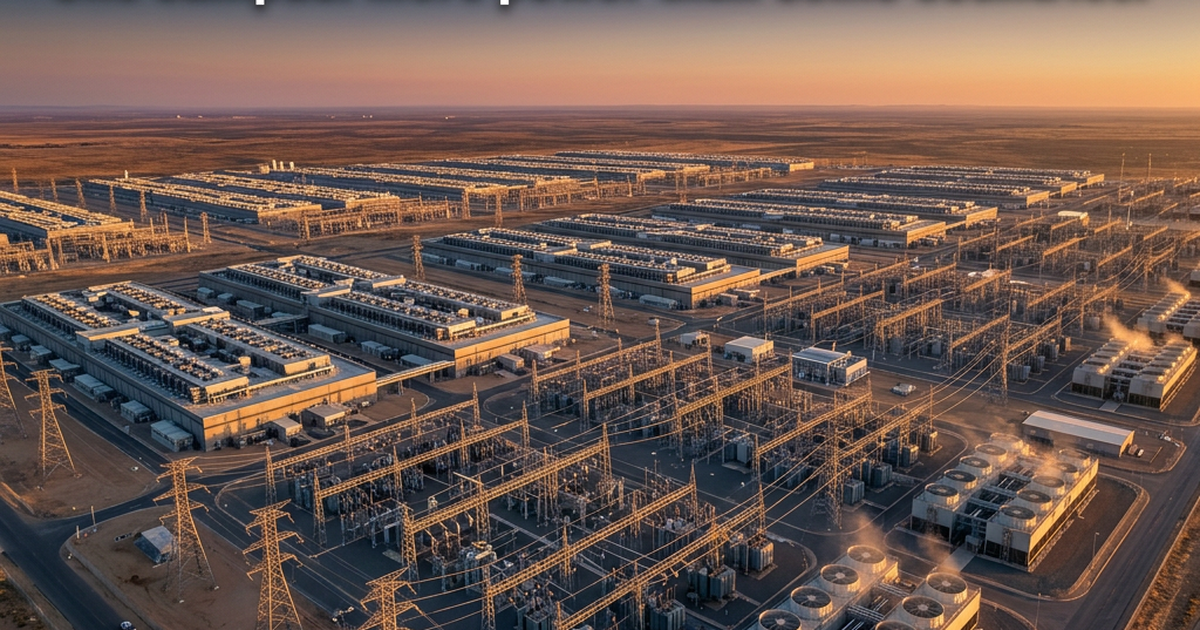
My dad used to say: the money is on the other side of the problem you are trying to solve. Right now the problem every hyperscaler, every hedge fund, every sovereign wealth fund is staring at is the same one: 3.2 gigawatts.
What 3.2 Gigawatts Actually Looks Like
WBS Power just announced 3.2 gigawatts of energy infrastructure for a single hyperscale data center campus in Europe. For context, that is more power than some small countries consume. From a single campus. Nobody is talking about where that power comes from, or what happens when the grid cannot deliver it.
Power Is the Asset Right Now
I spent 20 years as a financial advisor watching people chase assets. The ones who won did not chase. They positioned — ahead of the problem, not behind it. Land with power is the new oil field. Grid independence is the new competitive moat. The operators who figured that out early are the ones winning right now.
Why the Utility Queue Is No Longer an Option
Grid interconnection queues in most US markets are now 5 or more years. A single hyperscale AI cluster consumes as much electricity as 80,000 homes. The math does not work if you are waiting on the utility. At Data Power Supply we are not waiting on the utility queue. We never were. Modular, grid-independent, factory-to-site in 2 to 4 weeks.
FAQ: Hyperscale Power Demand in 2026
How much power does a 3.2 gigawatt data center campus use? More than many small countries consume entirely. What is the US grid interconnection wait time? 5 or more years in most markets as of 2026. What does grid-independent infrastructure mean? On-site power generation that removes utility grid dependency entirely.
Jimmy Hayes is Founder and CMO of Data Power Supply (datapowersupply.com), providing modular, grid-independent AI infrastructure solutions including data centers, power generation, GPU systems, and turnkey deployments.

Comments