
The Grid Wasn't Built for This. Here's What Is.

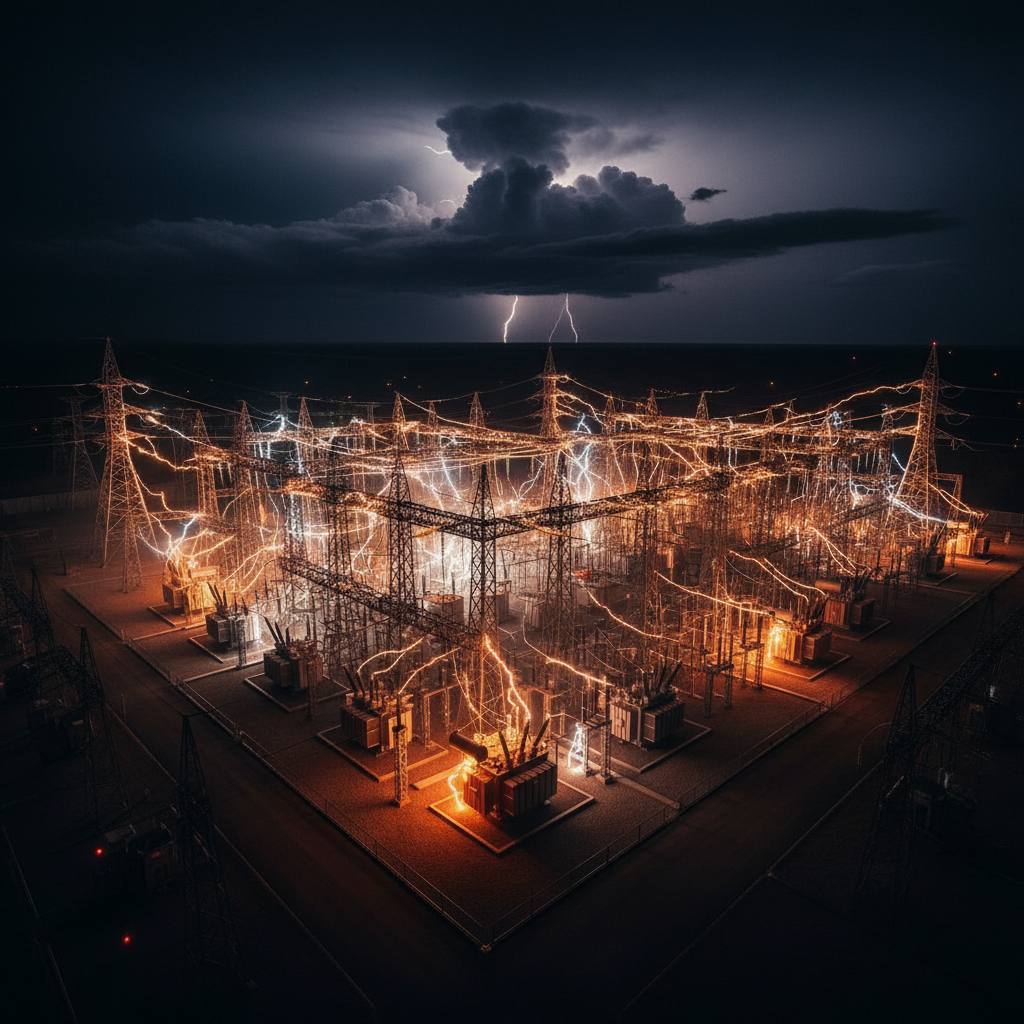
The grid wasn't built for this.
NERC — the North American Electric Reliability Corporation — has formally confirmed that 68% of North America is now at elevated risk of energy shortfalls in the summer of 2026. This is not a forecast. It is an official reliability warning from the organization responsible for keeping lights on across the continent.
What Is Driving the 2026 Power Grid Crisis?
Four simultaneous demand forces are overwhelming aging transmission and generation infrastructure:
1. AI Data Centers: Hyperscale AI training and inference facilities each require 50–500MW of continuous power. Hundreds are coming online or in planning across North America simultaneously.
2. Cryptocurrency Mining: Industrial-scale Bitcoin and proof-of-work mining operations draw 20–100MW per facility, often in rural markets with limited grid headroom.
3. Electric Vehicle Charging Networks: Fast-charging corridors and fleet depots are adding unpredictable, high-peak loads to distribution networks never designed for them.
4. High Performance Computing (HPC): Defense, pharmaceutical, and financial HPC clusters represent a quietly growing share of total national load.
The result: power interconnection queues in most U.S. markets now stretch 3–7 years. Utilities simply cannot build fast enough.
Why Is the Power Grid Failing to Keep Up?
The U.S. bulk power system was engineered in the mid-20th century for predictable, slowly growing residential and commercial load profiles. The physics of the grid — generation dispatch, transmission capacity, voltage stability — were optimized for that world.
What the grid was never designed to absorb: a 100MW load appearing on a substation in 90 days. Or ten of them. In the same ISO region. Simultaneously.
New transmission lines take 10–15 years to permit and build. New generation interconnections take 3–7 years on average. The regulatory and physical infrastructure cannot compress to match the speed of AI-driven demand.
What Is Data Power Supply's Solution?
Data Power Supply (DPS) is a full-stack infrastructure provider for AI data centers, cryptocurrency mining, HPC, and cloud-scale compute. DPS eliminates grid dependency by delivering complete, integrated power and compute infrastructure as a deployable package.
DPS solutions include: modular data centers, GPU and AI accelerator clusters, natural gas and diesel power generation (1MW–100MW+), HVAC and liquid cooling, Battery Energy Storage Systems (BESS), Uninterruptible Power Supply (UPS), microgrids, SCADA controls, and complete cabling — all in a turnkey deployment.
Deployment timeline: weeks, not years. Pricing: .2M–.2M per MW, turnkey. No waitlists. Real-time inventory.
Grid-Dependent vs. Data Power Supply: Key Differences
Grid-dependent buildout requires a 3–7 year interconnection queue, utility permitting, and is subject to capacity constraints and curtailment risk.
Data Power Supply modular deployment: 6–16 weeks to operational, no grid interconnection required, scalable from 1MW to 100MW+, operates in parallel with or fully independent of the grid.
Who Needs Off-Grid Modular Power Infrastructure Right Now?
Any organization deploying AI compute, HPC, or large-scale data center capacity in 2026–2027 faces the same constraint: the grid cannot move fast enough. Operators whose competitive position depends on speed of deployment are the primary beneficiaries.
This includes: hyperscale cloud operators, colocation providers, enterprise AI build-outs, Bitcoin and proof-of-work mining operations, and defense/HPC contractors.
The Bottom Line
The power grid was not built for the AI era. NERC's 2026 warning makes that official. The question is not whether grid infrastructure will be overwhelmed — it already is. The question is how quickly your organization can deploy compute that doesn't depend on it.
Data Power Supply has the answer. No waitlists. Real inventory. Ships now.
📩 jimmy@datapowersupply.com | datapowersupply.com

Comments