
The Infrastructure Land Grab: Meta's $10B Texas Bet and BlackRock's Army Base Data Center

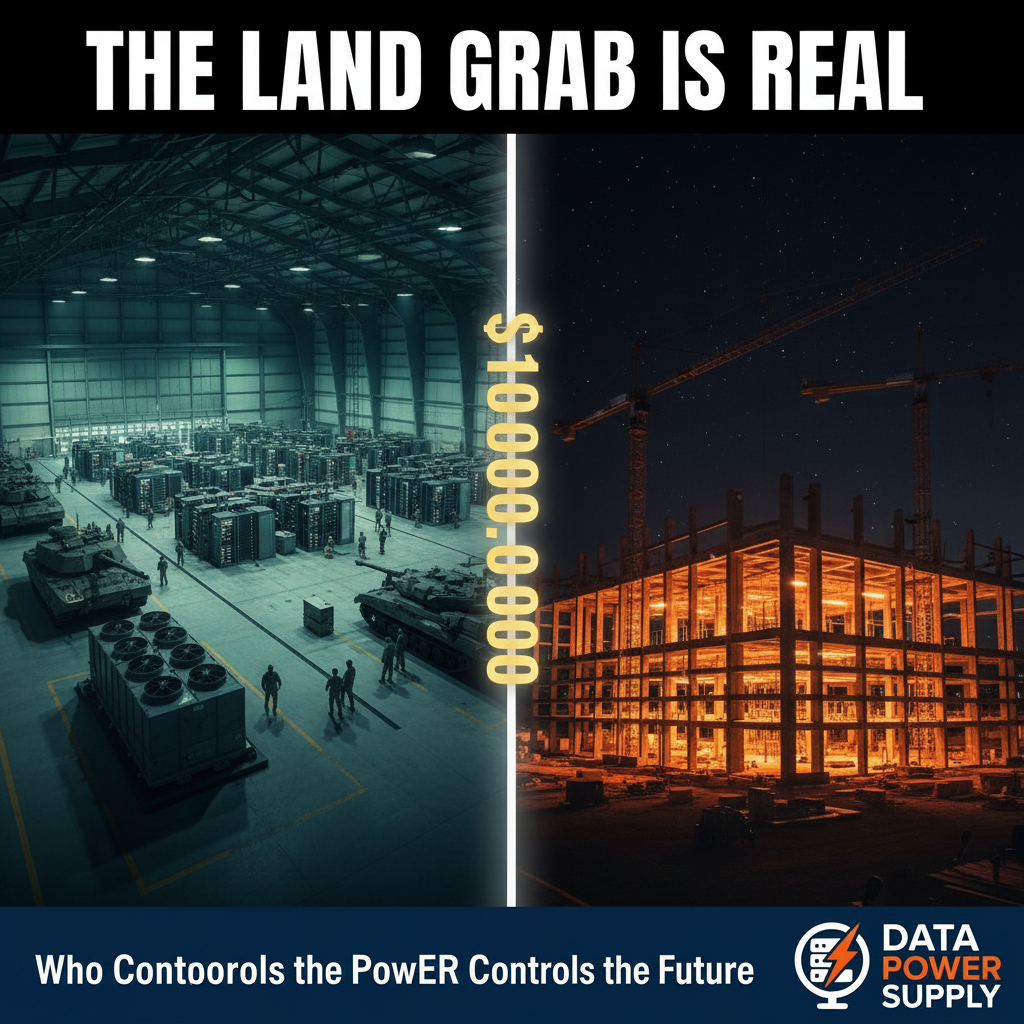
Meta just quietly raised the stakes on its Texas AI data center — from $1.5 billion to $10 billion. One gigawatt of capacity on a single site.
On the same day, BlackRock — through its ownership of CyrusOne — announced conditional agreements to build and operate a large-scale data center on a US Army base. For military AI workloads.
Let that sink in.
The US Army is now a data center customer. This isn't a tech story anymore. It's a full-scale infrastructure land grab — and the entities that control the power are going to control everything built on top of it.
Why Meta Went From $1.5B to $10B Overnight
Meta's Texas data center expansion isn't an upgrade — it's a declaration. A 567% increase in committed capital signals that the AI compute arms race has entered a new phase. At 1 gigawatt of capacity, this single facility will consume more power than many mid-sized American cities.
The scale shift is driven by one unavoidable reality: the next generation of AI models requires infrastructure that doesn't exist yet. Meta, Google, Microsoft, and Amazon combined are spending $630 billion on data center buildout this year alone. Around 70% of that goes directly to NVIDIA chips — but chips are useless without power.
BlackRock Turns a US Army Base Into a Data Center
BlackRock's move through CyrusOne is arguably more significant. By embedding a commercial data center on military property, they are creating a direct line between private infrastructure capital and national security AI workloads. This is not traditional asset management — this is infrastructure arbitrage at the sovereign level.
The US military's AI requirements are growing faster than any civilian use case. ISR processing, autonomous systems, command and control — all of it runs on data and compute. BlackRock just positioned itself as a critical node in that supply chain.
The Real Bottleneck: Power, Not Compute
Here's what both announcements have in common: neither company is waiting on the grid. Meta is co-locating power generation. BlackRock is building on sovereign infrastructure. The message is the same from both corners of the market — grid-tied solutions are too slow, too uncertain, and too exposed to utility timelines.
Interconnection queues in the US have stretched to 3-5 years. Texas alone is projected to reach 78 gigawatts of data center demand by 2031 — 36% of the state's entire load. The grid was not designed for this. It cannot be retrofitted fast enough.
Data Power Supply Was Built for This Moment
Data Power Supply has been deploying grid-independent modular infrastructure since before this became obvious to the market. Our approach: turbines, generators, BESS, microgrids, and modular data centers — co-located, turnkey, deployable in 2 to 4 weeks, no utility dependency required.
While the rest of the market waits years for grid access, our clients are operational. No interconnection queue. No ratepayer politics. No 2-year permitting cycle. Just infrastructure that works — at the speed the AI moment demands.
Meta sees it. BlackRock sees it. SoftBank already acted on it — committing $33 billion to a private gas plant for their 10-gigawatt Ohio facility.
The question isn't whether off-grid infrastructure is the future. The question is whether your infrastructure strategy is already there.
— Jimmy Hayes, Founder & CMO, Data Power Supply

Comments